 Language

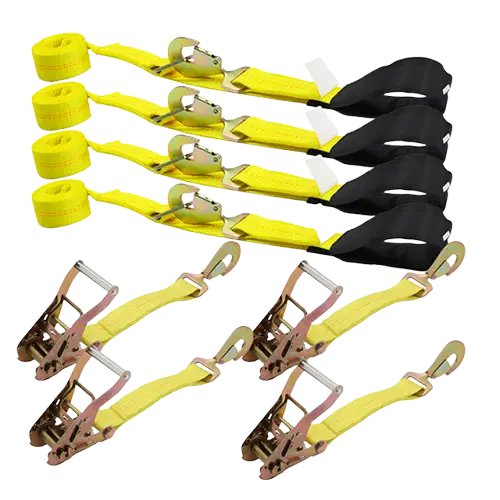
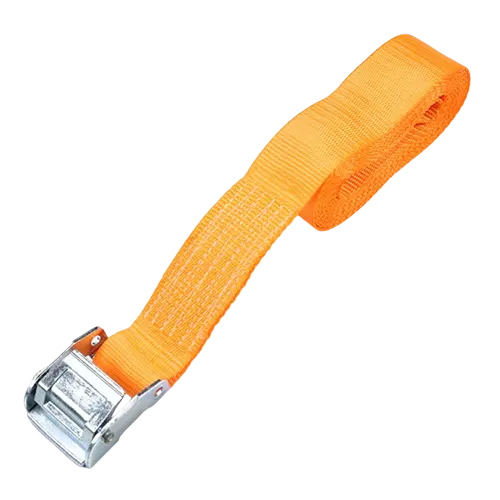
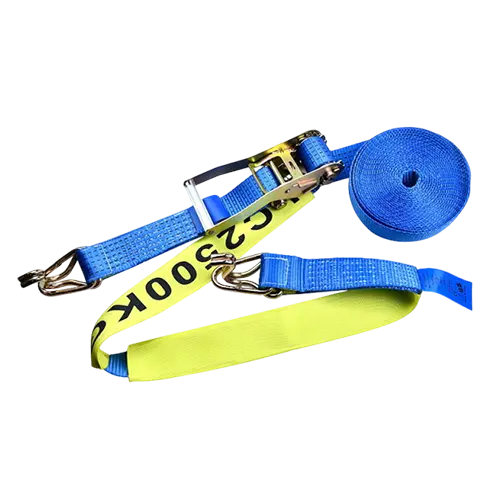
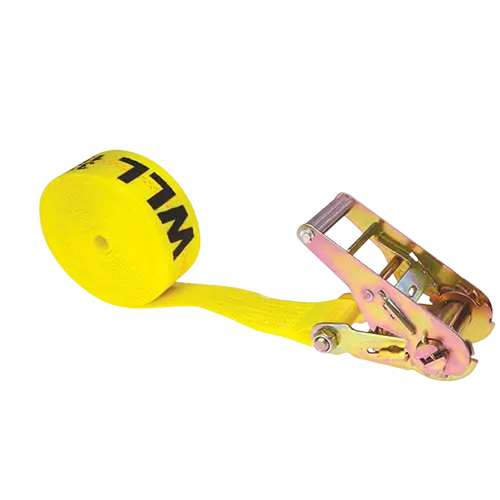
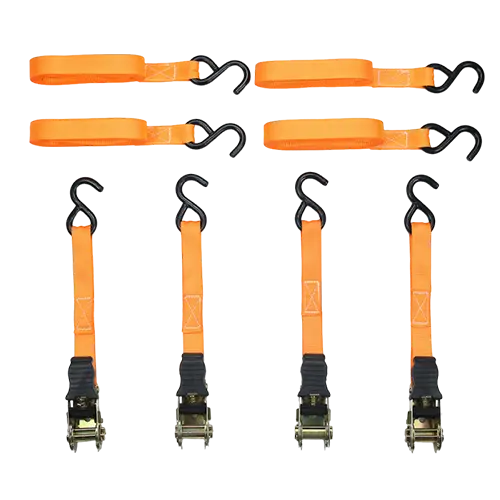
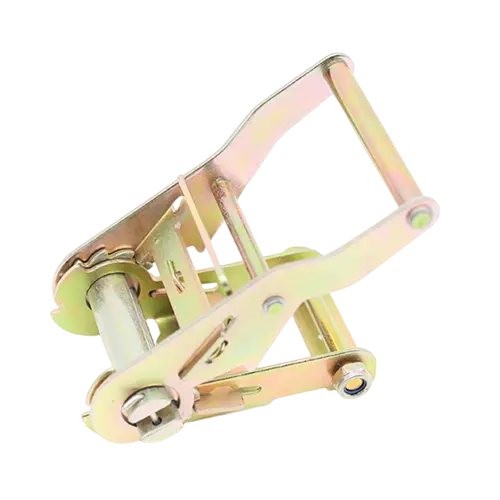
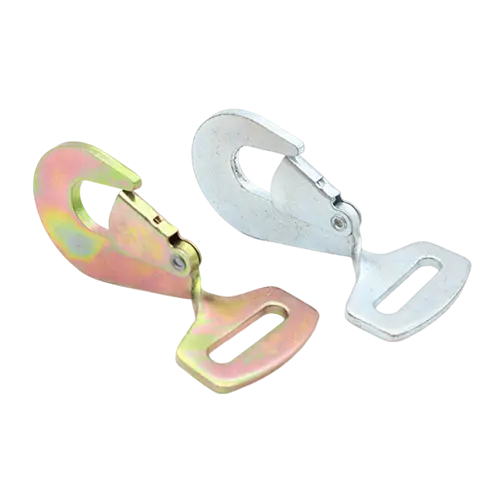
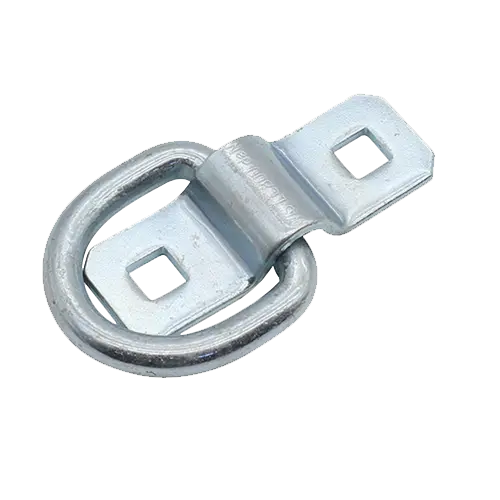












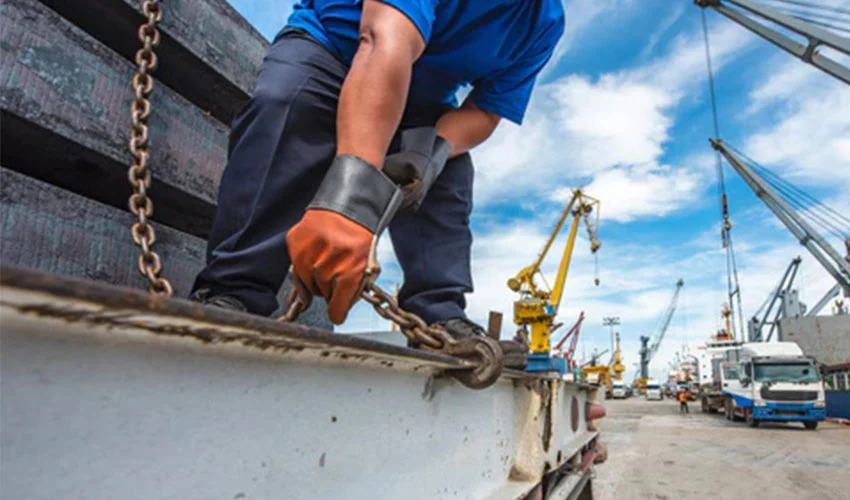
Consider an E-track cam buckle strap for hand-adjusted restraint of pressure-sensitive cargo, provided its assembly WLL meets the securement plan. Choose a ratchet when mechanical tensioning is appropriate, then check the exact model's rating rather than assuming that every ratchet is higher-rated.
The decision depends on more than whether the freight looks heavy or fragile. Compare the complete strap's working load limit, the cargo's tolerance for contact pressure, the anchor arrangement and the space available to operate the buckle.
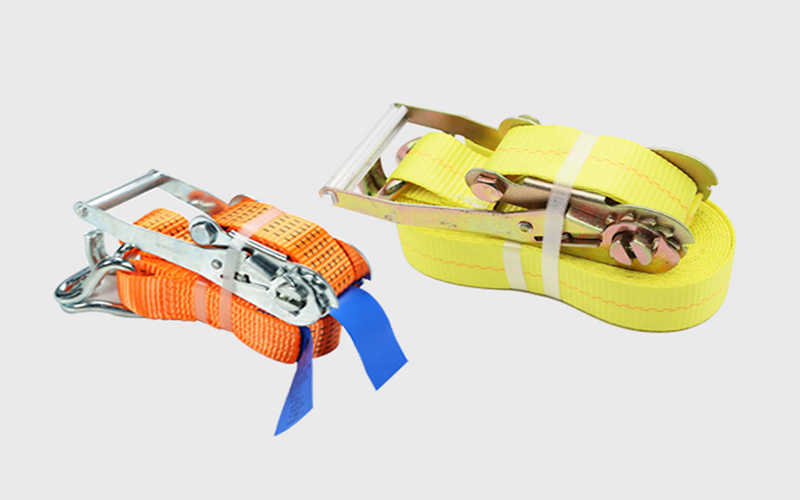
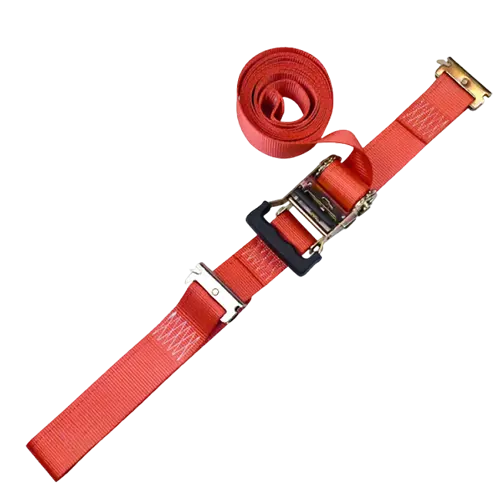
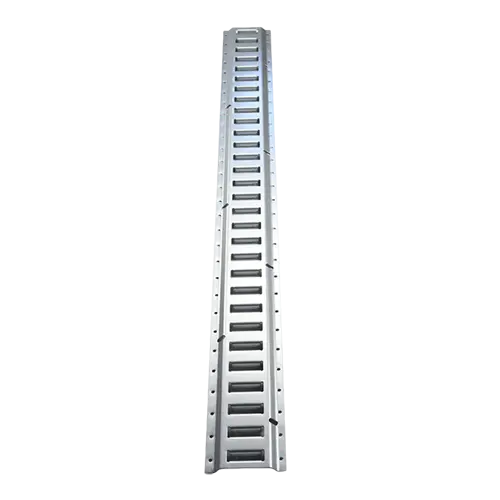
E-track is the connection system: slotted rails accept compatible fittings in box trucks, box vans and enclosed trailers. Sharing that connection does not give two straps the same capacity. In Force Rigging's 2-inch by 12-foot range, the red ratchet is rated at 1,467 lb WLL, the red cam buckle at 833 lb and the blue combination-fitting ratchet at 1,000 lb.
Cam straps vs ratchet straps: how the tensioning methods differ
What is an E-track cam buckle strap?
An E-track cam buckle strap combines compatible rail fittings with a pull-to-tighten buckle. The operator pulls the free webbing through the buckle to remove slack and apply tension; the cam grips the webbing to hold the adjustment. Cam tie-downs are one type of non-ratchet tie-down strap, not a name for every non-ratchet design.
Hand-pull adjustment can be useful for pressure-sensitive cargo, but it does not prevent packaging damage by itself. A lower WLL is also not a force-limiting feature: it tells you the assembly's rated working load, not how much pressure the cargo can tolerate.
How an E-track ratchet strap tightens
A ratchet strap takes up webbing through a handle-operated mechanism. That mechanical leverage changes how the operator applies tension. It does not mean the strap should be tightened as hard as possible, particularly where it crosses cartons, furniture panels or unprotected edges.
For either type, establish the intended strap path, engage the correct fittings, remove slack, tension according to the product instructions and confirm that the mechanism is secured. Follow the instructions for the specific buckle; do not transfer threading or locking steps from a different design.


| Selection question | Cam buckle strap | Ratchet strap |
|---|---|---|
| How is tension applied? | By pulling the free webbing by hand. | By operating the ratchet handle. |
| What clearance should I check? | Access to pull the webbing and operate the release. | Room to move the handle and close the mechanism. |
| What determines rated capacity? | The specified complete assembly and its connections. | The specified complete assembly and its connections. |
| Does it protect fragile cargo automatically? | No. Check contact pressure, packaging and the strap path. | No. Control applied tension and protect vulnerable contact points. |
Compare real E-track ratchet and cam buckle strap ratings
Width and total length are useful starting fields, but neither identifies a complete assembly. These three Force Rigging product specifications demonstrate why buyers should compare WLL and end fittings alongside the tensioning mechanism.
Three 2-inch by 12-foot assemblies, side by side
| Specification | Red ratchet | Red cam buckle | Blue ratchet with combination fittings |
|---|---|---|---|
| Webbing width | 2 in | 2 in | 2 in |
| Total length | 12 ft | 12 ft | 12 ft |
| Listed fixed-end length | 4 ft | 4 ft | 4 ft |
| End-fitting configuration | E-fitting | E-fitting | Spring E-fittings and wire / double J-hooks |
| Webbing break strength | 6,000 lb | 6,000 lb | 6,000 lb |
| Assembly break strength | 4,400 lb | 2,500 lb | 3,000 lb |
| Assembly WLL | 1,467 lb | 833 lb | 1,000 lb |
Product-specific values from the linked Force Rigging pages. They are not universal ratings for all ratchet or cam buckle straps. WLL means working load limit; lb denotes pounds.
Why the same webbing rating does not mean the same assembly WLL
Webbing break strength describes the webbing specification. Assembly break strength describes the complete strap's stated break rating. WLL is the stated working load limit. None of these figures tells you the tension an operator has actually applied to a load.
A factory specification comparison
What I would carry into the purchase order
I would keep the exact configuration attached to every capacity figure. The two red models differ in published WLL by 634 lb: 1,467 minus 833. That is a comparison of ratings, not a measurement of clamping force or a reason to apply more pressure to a carton.
The blue ratchet model adds wire-hook connection options, yet its published WLL is lower than the red ratchet model's. I would therefore specify the assembly and end fittings rather than order simply by the word "ratchet." The shared 6,000 lb webbing figure does not identify which component limits each configuration, and it does not prove that the webbing construction is identical.
For U.S. commercial transport applications covered by the rule, 49 CFR 393.108(a) bases a tiedown's WLL on its lowest-rated component, including the tensioner, or the anchor-point WLL, whichever is lower. A strap rating cannot establish the capacity of an installed rail or vehicle attachment.
For the broader purchasing framework, see our ratchet strap specifications buyer's guide.
Which E-track straps fit your box truck or enclosed trailer loads?
Choose box truck straps by the load and restraint arrangement, not by the vehicle name alone. A trailer with suitable E-track anchor points can carry loads with very different packaging strength and securement needs.
| Load or operating condition | Option to evaluate | Check before selecting |
|---|---|---|
| Furniture or pressure-sensitive boxed goods | Cam buckle where hand adjustment and the assembly WLL suit the restraint task. | Packaging strength, contact locations, edge protection and the ability to restrain movement without crushing the load. |
| Palletized freight or equipment | Ratchet where mechanical tensioning and the specified rating suit the plan. | Load dimensions, blocking, strap routing, anchor capacity and handle clearance. |
| Mixed loads and changing cargo profiles | Different rated assemblies for different tasks. | Clear identification, appropriate tension control and instructions for each configuration. |
| Trailers using both E-track and suitable D-rings | A compatible combination-fitting assembly. | The intended connection, hardware seating and the rating applicable to the supplied configuration. |
Pressure-sensitive furniture and boxed goods
A cam buckle can be a ratchet strap alternative when the cargo benefits from hand-pull adjustment and the assembly meets the restraint requirement. Start with the surface the strap will contact: a carton corner, an unsupported panel and a protected structural area are different contact conditions.
Changing the buckle cannot compensate for unsuitable packaging or a poor strap path. Where a tiedown could be cut or abraded against cargo, the FMCSA cargo securement guidance requires edge protection for covered applications. The same guidance requires tiedowns to remain secured against loosening or releasing in transit.
Palletized freight, equipment and mixed loads
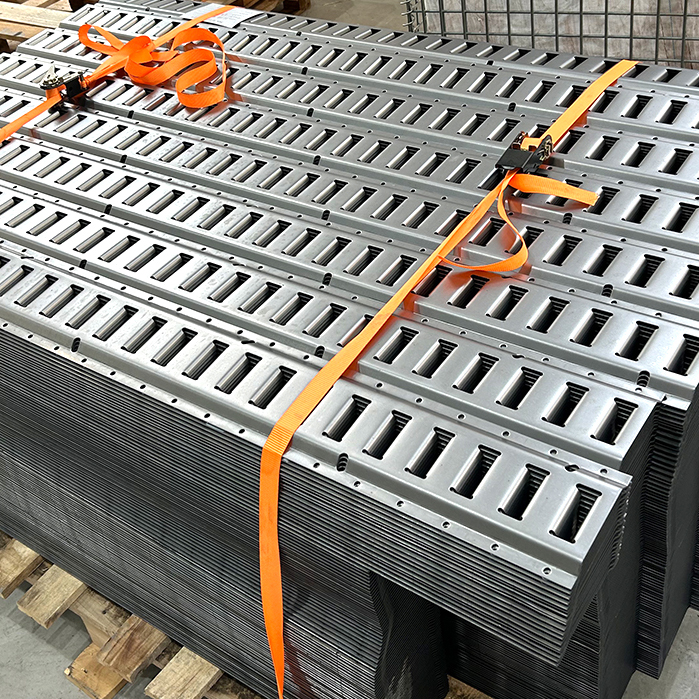
A higher-rated ratchet assembly may fit a demanding restraint task, but cargo weight alone does not select the strap or establish the required number. Routing, load dimensions, blocking and applicable securement rules also matter. Do not treat one strap's WLL as the maximum weight of cargo that a whole vehicle can carry.
For mixed loads, decide where each strap will act before choosing the mechanism. Keep the model and rating identifiable. Neither "cam for all light goods" nor "ratchet for everything" is a complete selection method.
Check E-track anchor points, end fittings and fixed-end length
Follow the actual connection path
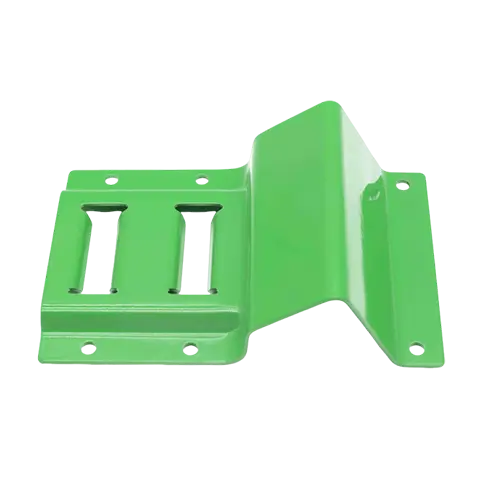
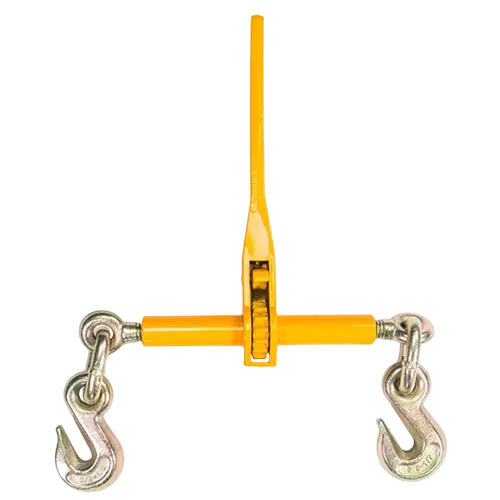
Ratchet strap end types and tensioner types answer different questions. The tensioner sets the adjustment; the end fitting connects the assembly to an anchor. A spring E-fitting engages a compatible rail slot. A wire hook needs a suitable connection such as a compatible D-ring.

The blue configuration provides both spring E-fittings and wire hooks. Its connection choices do not create two capacities that can be added together. Check the connection actually used and keep the complete assembly rating attached to that configuration.
For an E-track connection, inspect the fitting's engagement with the rail and the keeper's operation. For a hook connection, check compatibility and seating rather than assuming that any metal opening is an acceptable anchor.
Our E-track tie-down rail is a separate product from the strap. Rail mounting and the supporting vehicle structure must be considered with the connection; adding the WLLs of available straps does not establish the rail installation's capacity.
Put the buckle where you can reach and inspect it
From the factory specification side
My starting point is the installed position, not just the total strap length. I would map the intended route around the load, then check where the fixed section puts the buckle. A strap can reach both anchors yet leave its tensioner against packaging or in a gap where the operator cannot work it properly.
Our red ratchet model lists a 4-foot fixed end and offers 1-foot and 2-foot options. I would ask the buyer to confirm the required buckle position before choosing among them. A shorter fixed section moves the tensioner closer to its fixed-end anchor; it does not automatically make the whole arrangement better.
For a sample-fit check, I would use representative packaging and the intended anchor locations. Can the operator reach the release? Does the ratchet handle have clearance? Can the mechanism close fully? Does metal hardware bear against a vulnerable surface? Those checks give the buyer a practical basis for approving the configuration.
What to specify when ordering E-track straps
A useful inquiry lets the supplier distinguish the strap rating from the installation and the cargo-contact requirements. Include:
- The cargo type, dimensions, weight and packaging, with photographs of vulnerable contact areas.
- The required complete-assembly WLL and the securement arrangement it must support.
- Cam buckle or ratchet tensioning, with any reach or operating-clearance restrictions.
- Webbing width, total length and fixed-end length as separate fields.
- The intended end fittings, plus photographs or drawings of the rail slots or other anchors.
- Quantity and identification needs, including the information required on the assembly label.
A model-specific inquiry
"Please quote the red 2-inch by 12-foot E-track ratchet strap listed at 1,467 lb WLL. Please confirm the configuration and total length with a 2-foot fixed end, the E-fitting details and the assembly identification. The attached photos show the intended anchor locations and buckle-access area."
The request names an existing configuration and asks for confirmation of the requested option. It does not treat a length change, a new fitting or a different tensioner as automatically covered by another assembly's rating.
Our product pages describe customization of length, fittings and branding. For a custom order, confirm the resulting assembly specification rather than carrying over a catalog WLL without checking.
Questions buyers still ask
Can I use ratchet and cam buckle straps in the same trailer?
Different strap types can serve different restraint tasks in the same trailer when each assembly, connection and arrangement is suitable. Do not assume that two nearby straps share load equally or that mixing types makes their individual ratings interchangeable.
Does a short trip change the required strap rating?
A short route is not a basis for lowering the specified rating or omitting securement checks. Select for the cargo, arrangement and applicable transport requirements, not just the distance to the delivery point.
Does E-track strap color identify its length or WLL?
Color alone is not a reliable specification. The red ratchet and red cam buckle models in this comparison have the same listed width and length but different WLLs. Match the model and assembly identification to the order rather than relying on color.
Send the load and connection details with your inquiry
For E-track straps, specify the complete assembly rating, connection type and buckle position together. Send Force Rigging your cargo information and anchor photographs so the requested configuration can be discussed against those requirements.
Discuss an E-track strap specification