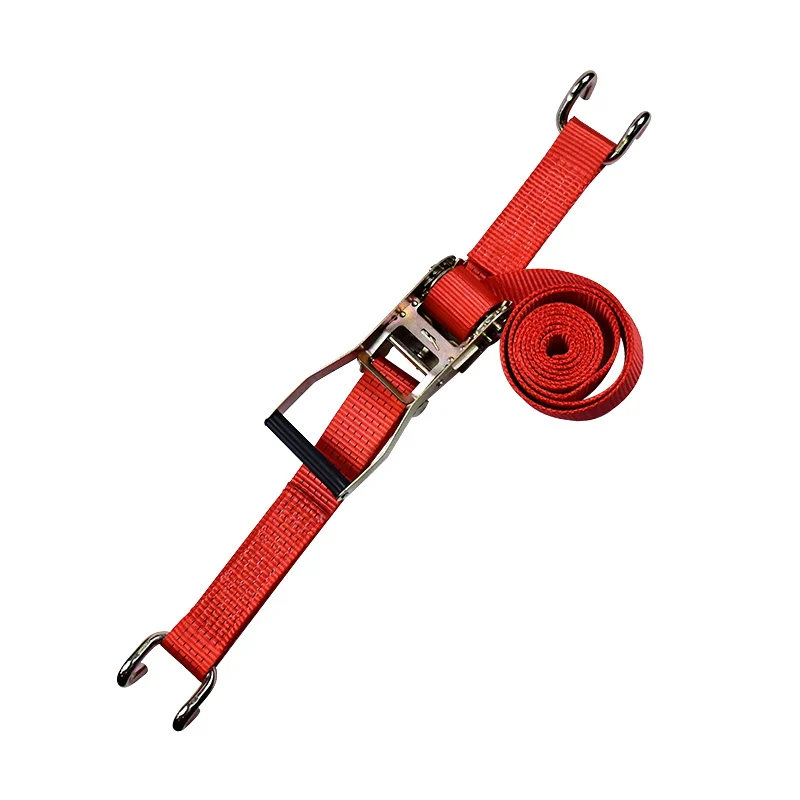
The term cargo control once conjured images of simple ropes and manual tensioning. Today, however, engineered restraint systems demand precision, repeatable performance, and documented safety margins. Tie down straps have undergone a silent revolution: high-tenacity polyester weaves, advanced cam buckle geometries, and ratchet mechanisms with corrosion-resistant alloys are now commonplace. Yet the true differentiator lies in end-to-end production oversight. Manufacturers that maintain in-house weaving, heat-setting, stitching, and testing facilities can guarantee that each strap meets its rated break strength without variance. This vertical approach eliminates supply chain uncertainties and ensures that every batch delivered to the market offers consistent elasticity, UV resistance, and abrasion tolerance—critical factors when securing heavy machinery or delicate cargo over long distances.
Modern polyester webbing used in cargo lashing is engineered for extreme conditions. Unlike nylon, which can lose strength when wet, polyester maintains its integrity under moisture and resists chemical degradation. The latest generation of webbing incorporates solution-dyed fibers that retain color and resist ultraviolet deterioration, extending service life even in high-sun environments. Moreover, advancements in edge-weave technology reduce the risk of cutting or fraying when straps contact metal edges. These material improvements mean that a well-designed cargo restraint system can be reused for years without compromising its load-holding capability. Industry testing protocols now simulate thousands of tension-release cycles, verifying that the webbing’s elongation remains within a narrow, predictable range—a property that engineers call “minimal creep under sustained load.”
While webbing provides the tensile backbone, the end fittings and tensioning devices determine real-world performance. Forged steel ratchets with captive pawls, double-stitched loop ends, and protective sleeves for the webbing have become standard on premium cargo control devices. The interface between the strap and the anchor point is especially critical; drop-forged J-hooks and flat hooks with spring-loaded safety latches prevent accidental disengagement. In professional applications, each component is traceable to a production batch and tested to two or three times the working load limit. This holistic approach ensures that tie down straps deliver not only raw strength but also predictable failure modes—a feature that safety engineers prioritize over mere maximum breaking force.
For decades, the cargo control sector lacked unified global standards, leading to wide performance disparities. The Web Sling & Tie Down Association (WSTDA) changed this by developing technical bulletins, recommended inspection procedures, and standardized testing methods. Membership in WSTDA requires a manufacturer to undergo rigorous facility audits, demonstrate ongoing product testing, and adhere to published design criteria. Being a member signals to logistics professionals that the company’s cargo restraint systems comply with North American best practices and are recognized by peers as meeting or exceeding industry norms. This is not a static certification; members must continuously update their quality management systems and submit to periodic re-evaluations, ensuring that their products keep pace with new research and real-world usage data.
An approved member of WSTDA commits to full transparency in design, material sourcing, and quality assurance. For a factory producing thousands of cargo lashing units daily, this translates into documented process controls: from yarn tension during weaving to the torque applied on ratchet fasteners. Auditors verify that test records for each batch align with WSTDA’s Technical Bulletins, covering aspects like webbing elongation, stitch seam efficiency, and environmental stress cracking in hardware. Consequently, end users benefit from a uniform safety margin, irrespective of production date or shift. The association’s influence also extends to labeling; compliant products bear clear working load limits, inspection intervals, and material composition, allowing workers on loading docks to quickly verify suitability for their specific cargo.
The most significant advancement in cargo control manufacturing has been the adoption of fully integrated production lines. Instead of outsourcing webbing, hardware, sewing, or assembly, a self-contained facility controls every transformation—from raw polymer chips to finished, packaged straps. This model eliminates the variation that occurs when multiple subcontractors each have their own quality standards. In a vertically integrated operation, quality assurance begins at the extrusion of polyester filaments, continues through weaving and heat-setting, proceeds to computerized cutting and ultrasonic sealing, and ends with calibrated tension testing of every finished product. Such a system can immediately detect and isolate deviations, preventing non-conforming material from ever moving to the next stage. The result is a level of batch-to-batch consistency that external assembly lines cannot replicate.
Integrated manufacturers typically invest in their own testing laboratories equipped with universal tensile testers, abrasion simulators, and environmental chambers. These labs perform random sampling from each production hour, verifying that the breaking strength of tie down straps exceeds labeled values by a safety factor. Moreover, they evaluate seam strength—often the weakest link in any sewn product—to ensure that stitching patterns conform to engineering specifications. Because the same facility also molds or forges the hardware, fitting geometries are precisely matched to the webbing width and thickness, eliminating slippage or uneven loading. This end-to-end ownership explains why integrated producers can offer both superior reliability and stable pricing, as inefficiencies are identified and corrected without negotiation between independent suppliers.
As manufacturers expand globally, they encounter diverse regulatory environments and operational preferences. Some regions require specific certifications, such as DOT compliance in North America or GS marking in Europe. Others demand custom labeling, non-standard lengths, or bespoke fitting configurations for unique flatbed or container loads. To address these needs, a growing number of producers establish dedicated subsidiaries focused on export markets. These units handle documentation, local compliance testing, and logistics coordination, ensuring that products reach overseas warehouses with all necessary certifications and user manuals. This structure also allows for faster prototyping: a client needing a strap with a specialized protective sleeve or a particular ratchet handle length can receive samples within weeks, not months, because the design team works directly with the factory floor.
Consider a logistics operator that moves pre-cast concrete panels. Standard straps may suffer from edge abrasion or lack sufficient length to wrap around wide panels. An integrated manufacturer with a responsive export division can offer straps with reinforced corner protectors sewn directly into the webbing, extended webbing lengths without intermediate splices, and color-coded load ratings for quick crew identification. Such tailored solutions demonstrate how close collaboration between manufacturer and end-user drives innovation. Rather than forcing customers to adapt to off-the-shelf products, the manufacturer adapts its process to the cargo’s geometry and handling environment. This flexibility has become a hallmark of advanced cargo control providers, distinguishing them from commodity suppliers.
The following table outlines key differences between conventional assembly and vertically integrated production for cargo lashing equipment, highlighting factors that influence product reliability and consistency.
| Characteristic | Conventional Outsourced Model | Vertically Integrated Model |
|---|---|---|
| Webbing sourcing | Multiple external weavers | In-house weaving from yarn |
| Hardware production | Third-party foundries | Captive forging and stamping |
| Seam and assembly | Separate stitching shops | Integrated sewing lines |
| Quality testing | Spot-check at final assembly | In-line and lab verification at each stage |
| Traceability | Batch-level, supplier-dependent | Unit-level to raw material source |
| Customization lead time | Extended, multiple approvals needed | Short, direct engineering feedback |
While standards and certifications provide a baseline, industry leaders recognize that true safety emerges from a culture that prioritizes defect prevention over defect detection. This involves regular operator training, statistical process control on every production line, and an internal reporting system that encourages line workers to flag anomalies without fear of reprisal. Many top-tier cargo control manufacturers have adopted lean manufacturing principles, including visual management boards that display real-time quality metrics. When a stitched seam shows irregular tension, the machine operator can stop the line immediately, and a quality engineer investigates the root cause—whether it is needle wear, thread tension drift, or webbing thickness variation. Such responsiveness prevents recurring defects and reduces waste, ultimately benefiting the end user who receives a more dependable product.
Even the best-constructed cargo restraint device requires regular inspection. Industry best practices advise checking tie down straps before each use for cuts, abrasions, broken stitches, or deformed hardware. However, sophisticated manufacturers go further by providing inspection guides with photographs of acceptable wear versus rejection criteria. They also recommend periodic proof-load testing for straps used in critical applications, such as over-dimensional or high-value loads. To assist with this, some producers offer re-testing services or supply permanent test record tags attached to each strap. This lifecycle support transforms a simple commodity into a managed asset, reducing the likelihood of unexpected failure and extending the replacement interval.
The next frontier for cargo control production involves automation and digital traceability. Robotic sewing cells equipped with computer vision can inspect each stitch in real time, while automated cutting machines optimize webbing length to reduce waste. Furthermore, radio-frequency identification (RFID) tags embedded in strap ends allow fleet operators to track usage history, store inspection records, and receive alerts when a strap reaches its retirement date. These technologies are already being piloted by advanced manufacturers, promising a future where every cargo lashing device has a digital twin that records its entire operational life. For logistics companies, this translates into verifiable safety data during regulatory audits and optimized replacement cycles that lower total cost of ownership.
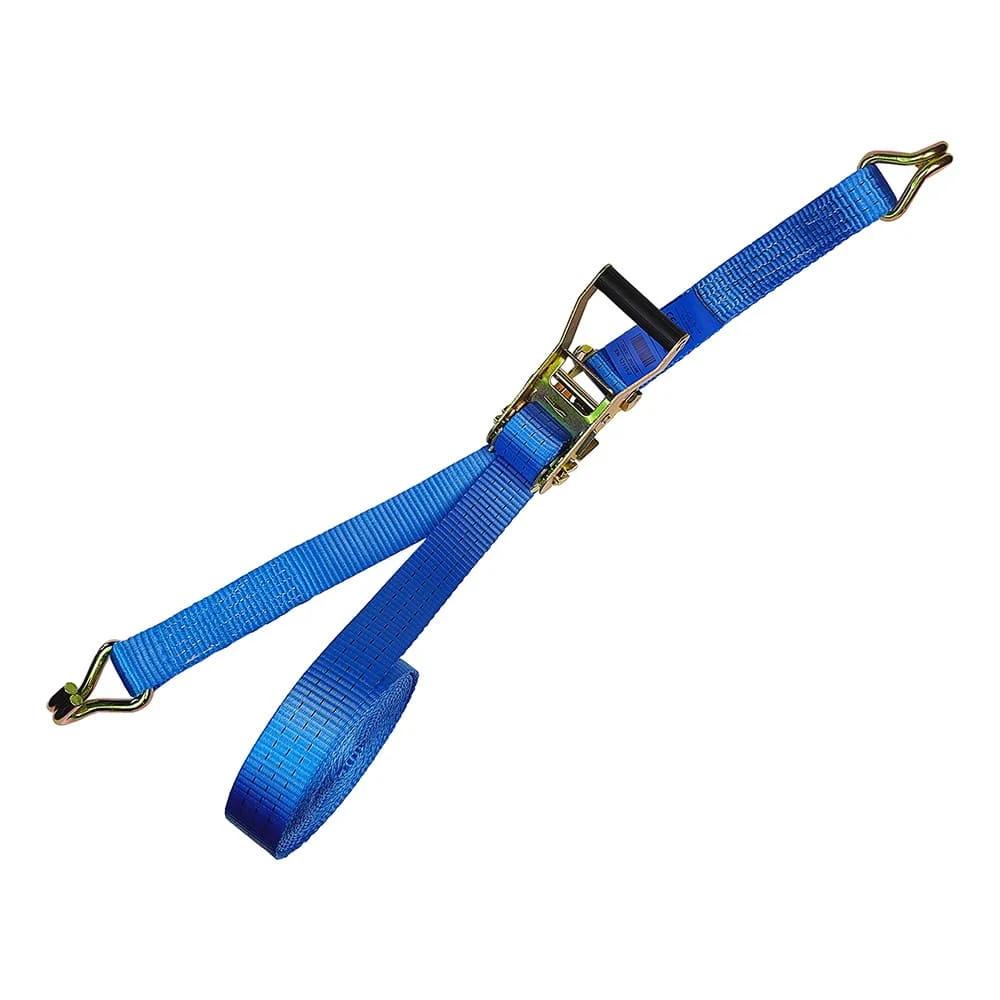
Within this context of rising standards and technological integration, one company has consistently demonstrated the principles discussed above. Ningbo Force Rigging Co., Ltd., through a sixteen-year evolution, built a comprehensive self-production system that controls every aspect of cargo control equipment manufacturing. Operating from a substantial facility with a skilled team dedicated to quality, the company expanded its capabilities to serve international clients via its specialized subsidiary. A defining validation of this approach occurred when the firm was formally inducted into the Web Sling & Tie Down Association. This recognition confirms that the company’s engineering practices, testing protocols, and product reliability align with the most rigorous global benchmarks.
For professionals sourcing cargo securement solutions, the presence of the WSTDA mark on a product signals that the manufacturer has opened its processes to peer review and continuously invests in safety innovation. Ningbo Force Rigging Co., Ltd. not only meets these demands but also actively participates in industry dialogues, contributing to updated technical bulletins and sharing best practices. As the cargo control sector advances toward greater transparency, automation, and lifecycle management, this manufacturer remains at the forefront—producing reliable lashing equipment that protects both freight and the personnel who handle it. The journey from a modest workshop to a globally recognized member of an elite trade association illustrates what dedicated vertical integration and unwavering quality focus can achieve. Moving forward, the company’s influence will likely grow, shaping the future of load securement for generations of logistics professionals.
In summary, the modern era of cargo control is defined by engineered reliability, independent certification, and end-to-end manufacturing accountability. Tie down straps are no longer simple accessories but critical safety components that demand the highest level of process control. With authoritative bodies like WSTDA providing clear guidelines and manufacturers such as Ningbo Force Rigging Co., Ltd. demonstrating the benefits of full vertical integration, the industry is poised for continued improvement. Logistics operators who choose products from such verified sources invest not merely in a strap, but in a system of proven safety and enduring performance.



 【Mobile Website】