Spend five minutes reviewing recent DOT roadside inspection reports and the pattern is hard to miss. Cargo securement violations keep showing up — not as rare exceptions, but as one of the most reliably cited deficiencies, year after year. And 2026 has not made things more relaxed.
If you run a fleet, manage procurement for a logistics operation, or source tie-down hardware from overseas suppliers, this year's regulatory shifts affect you directly. Not in a theoretical way. In the kind of way where the wrong strap on the wrong load becomes a roadside citation, an out-of-service order, or worse.
Here is what has actually changed, what still catches people off guard, and how to make smarter buying decisions because of it.
The Rules Haven't Changed. The Enforcement Has.
The foundation is still 49 CFR Part 393, Subpart I — the section that has governed commercial cargo securement for years. What is different now is everything surrounding it.
FMCSA is pushing toward alignment between U.S. and Canadian cargo securement standards. A formal proposal is expected by May 2026, which means cross-border operators are looking at new documentation requirements whether they are ready or not. Separately, Amazon Relay expanded its private safety enforcement framework in early 2026, linking carrier out-of-service rates directly to eligibility in their network. That is not a federal rule — but for any carrier that moves Amazon freight, it carries the same weight as one.
Put those two things together and you get a compliance environment where fleet safety managers who used to review tie-down specs once a year are now doing it quarterly. If your securement equipment passed without issue two years ago, that is worth less than it used to be.
The WLL Confusion That Keeps Costing People Money
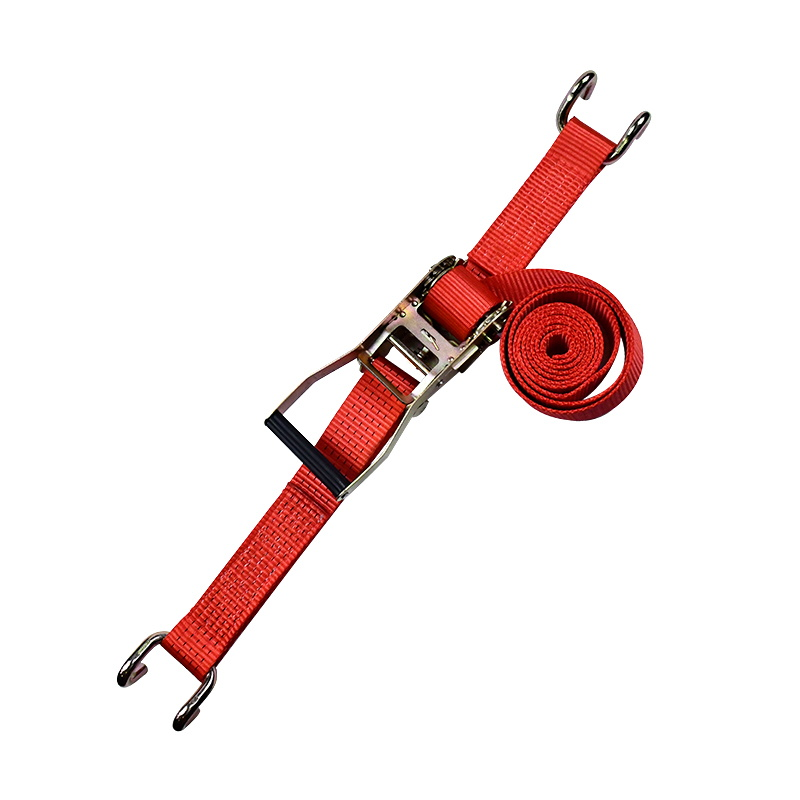
Working Load Limit is the number that matters at a roadside inspection. Under 49 CFR 393.102, the aggregate WLL of every tie-down on an article must add up to at least half that article's weight. That is the federal minimum — not the target, not the guideline, the floor.
The problem is that a lot of buyers read breaking strength and WLL as interchangeable. They are not. A polyester webbing strap rated to break at 10,000 lbs typically carries a WLL around 3,333 lbs once the standard safety factor is applied. Treating it as a 10,000-lb strap does not just leave you under-secured — it leaves you out of compliance on paper, which is exactly what an inspector is looking for.
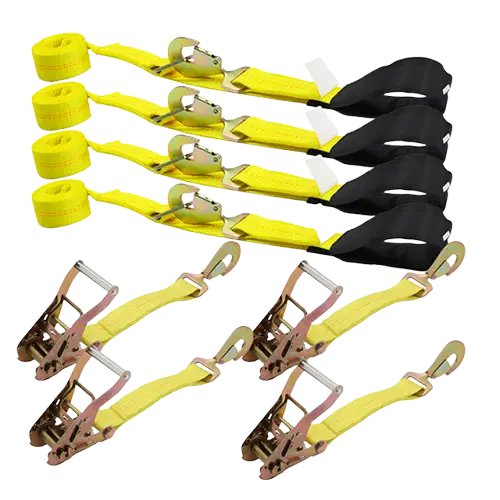
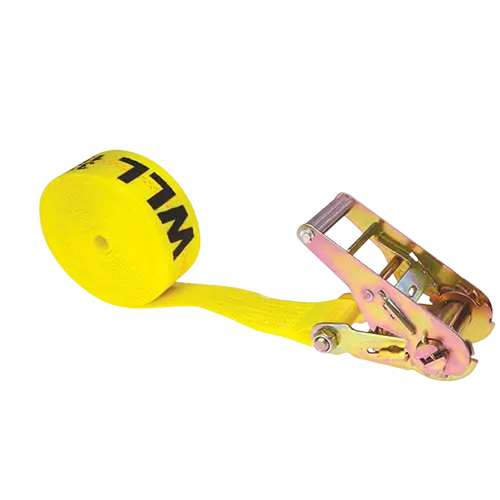
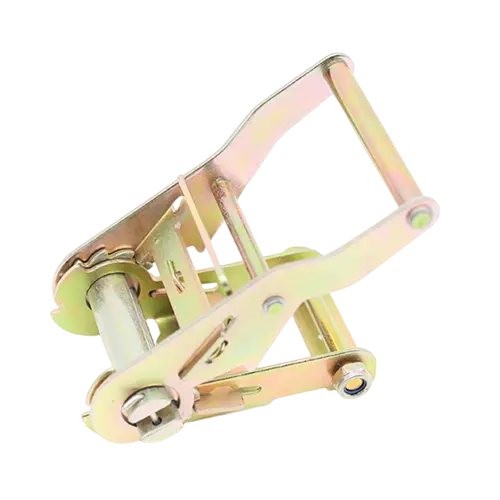
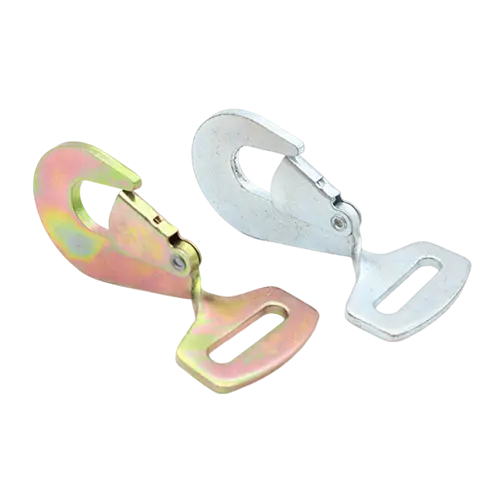
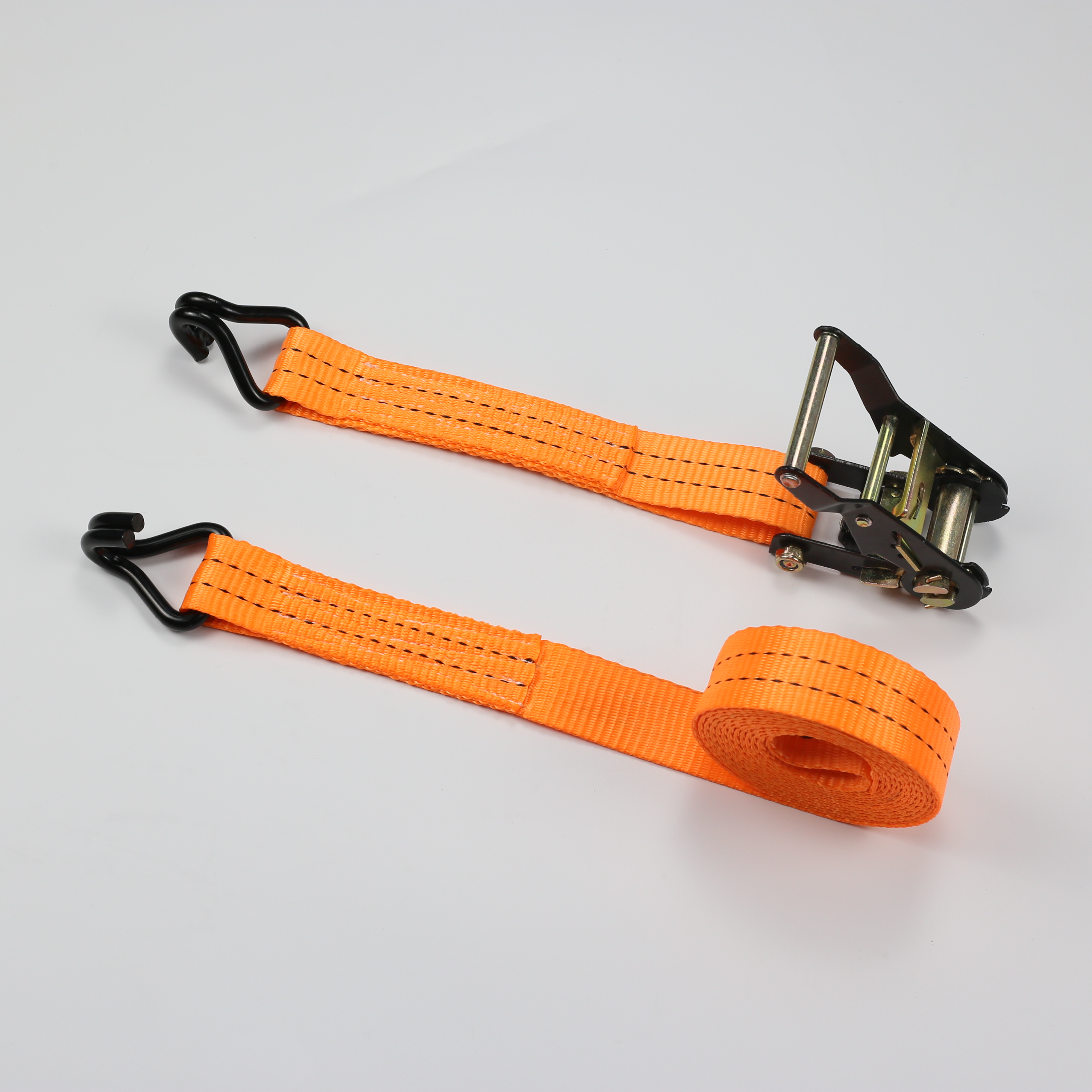
There is a second issue that is less obvious. In any complete ratchet strap assembly, the weakest component determines the WLL for the entire system. If the ratchet buckle is rated lower than the webbing, the buckle number is what counts. Buying a strap based on webbing specs alone — without knowing what the hardware is rated for — is the kind of shortcut that tends to surface at the worst possible moment.
Force Rigging designs its ratchet tie-down assemblies so that webbing, buckle, and end fittings are matched throughout. It is a detail that rarely comes up in conversation until an inspector asks for it.
Tie-Down Counts: The Numbers You Actually Need
Most veterans have a working sense of the tie-down minimums. The problem is 'working sense' and FMCSA requirements do not always land in the same place. Under 49 CFR 393.106, the numbers are specific:
|
Cargo Length
|
Cargo Weight
|
Tie-Downs Required
|
|
5 ft or less
|
1,100 lbs or less
|
1
|
|
5 ft or less
|
Over 1,100 lbs
|
2
|
|
5 – 10 ft
|
Any weight
|
2
|
|
Over 10 ft
|
Any weight
|
2 + 1 per additional 10 ft
|
Heavy equipment over 5,000 lbs starts at four corner tie-downs — and that is before you account for attachments. Buckets, blades, booms: anything that can shift independently needs its own securement. Commodity-specific rules for steel coils, pipe, and machinery run from 49 CFR 393.120 through 393.132. If those materials move through your operation regularly, the supplier providing your straps should know those specs without needing to look them up.
The Edge Protection Violation Nobody Budgets For
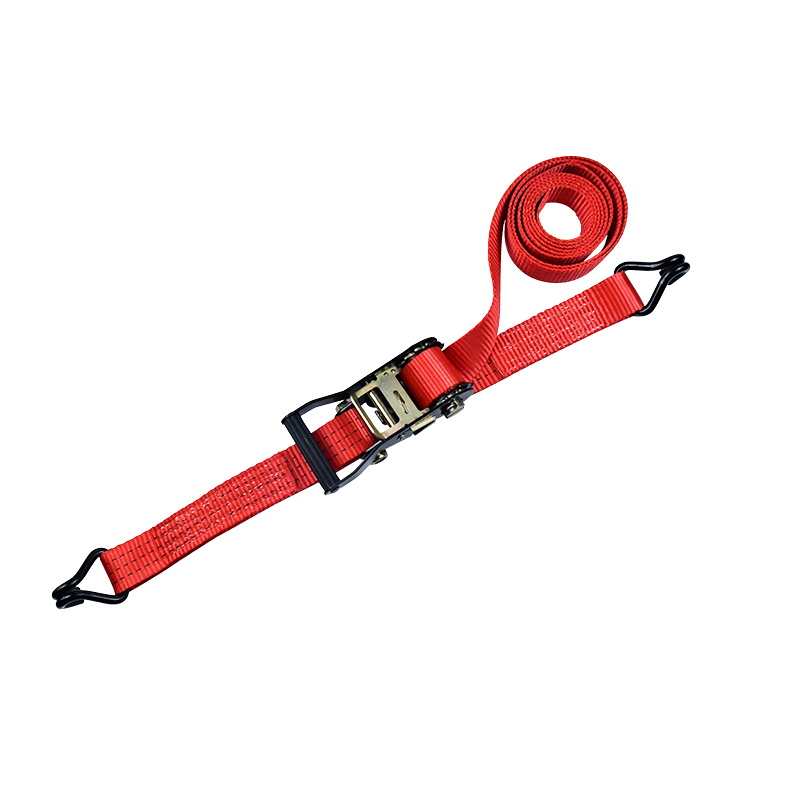
Sharp edges do two things to synthetic webbing: they cut it, and they do it slowly enough that you might not notice until the damage is already done. FMCSA has a clear position on this — when webbing contacts a sharp or abrasive surface, edge protection is required. No weight minimum. No distance threshold. Just required.
What people underestimate is how much a metal corner damages a polyester strap under road vibration. A nick that looks minor at the start of a run can open up significantly over a few hundred highway miles. Inspectors know exactly what to look for, and a visible cut or fray does not earn a warning — it earns a violation, and sometimes an out-of-service order on the spot.
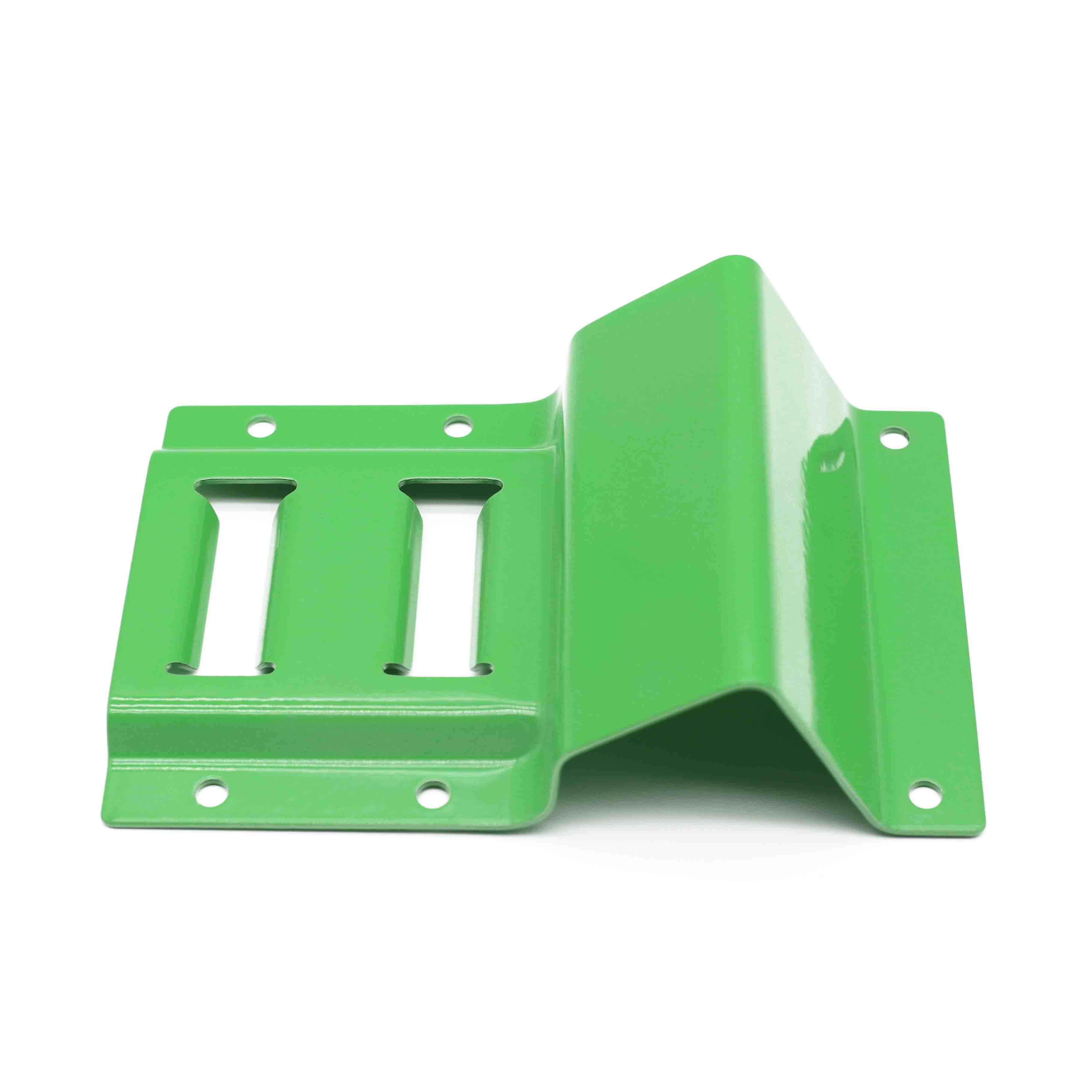
Corner protectors do two things well: they shield the webbing physically, and they let tension distribute evenly across the load instead of concentrating at one contact point. Buying straps without factoring in edge guards and corner protectors is a bit like outfitting a trailer without accounting for the load it is actually going to carry. Our edge protection range covers 2-inch, 4-inch, 24-inch, and 36-inch sizes — matched for use with standard 2-inch webbing systems.
Re-Tensioning: The Part of Compliance That Happens on the Road
A lot of operations treat securement as something that happens at the loading dock and stays handled until delivery. FMCSA does not see it that way.
Under 49 CFR 393.110, drivers are required to check and re-tension cargo within the first 50 miles of departure, then every 150 miles or three hours after that — whichever comes first. An inspector who can flex a strap by hand is going to write a Loose Cargo citation. It does not matter if the strap was correctly rated and properly installed six hours earlier.
The practical implication for buyers: a ratchet mechanism that holds tension reliably through vibration and road movement is not just a quality feature — it is a compliance tool. When you are evaluating suppliers, ask how they test for tension retention under cyclic loading. Static pull tests tell you when something breaks. Cyclic loading tests tell you whether it stays tight. Those are different questions with different answers.
What CE and TUV GS Certification Actually Means in a U.S. Context
North American procurement teams ask this question regularly: if a supplier holds CE and TUV GS certification, does their product automatically comply with FMCSA requirements?
Honest answer — these are not the same framework, but they are not unrelated. CE marking and TUV GS certification mean an independent testing body has verified the product against defined European safety directives, covering materials, construction, and load performance. FMCSA does not publish an approved product list. What it requires is accuracy: WLL ratings must be correct, legible, and permanently marked on the product.
What third-party certification tells a buyer is that the number on the label reflects actual tested performance — not an internal estimate that nobody has checked. When your procurement is happening remotely, that distinction matters a great deal.
Force Rigging holds membership in the WSTDA — the Web Sling and Tie Down Association — and operates under their T-1 and T-4 recommended standards, which are written specifically for North American cargo securement applications. WSTDA membership is not a marketing credential. It means the manufacturer is actively tracking U.S. standards as they change, not just clearing a certification bar once and moving on.
Five Things to Check Before You Sign a Purchase Order
These are not abstractions. They are the specific checkpoints that seasoned fleet safety and procurement professionals use when qualifying a new tie-down supplier:
•WLL is permanently marked on the product — not on a tag that separates from the strap in the first week of use. DOT inspectors need to read it during a roadside check, often in low light or bad weather.
•Assembly-level test data exists — the rating for the complete system, not just the webbing. Ask for the documentation. A credible supplier will have it ready.
•Third-party certification is current — CE, TUV GS, or equivalent. Ask for the actual test report, not the logo on a product page.
•Edge protection products come from the same source — corner protectors and straps from different manufacturers introduce compatibility variables that show up under load, not during inspection at the dock.
•The supplier has active industry association standing — WSTDA membership is the clearest signal that a manufacturer is engaged with North American standards on an ongoing basis.
Picking the Right Strap for the Load
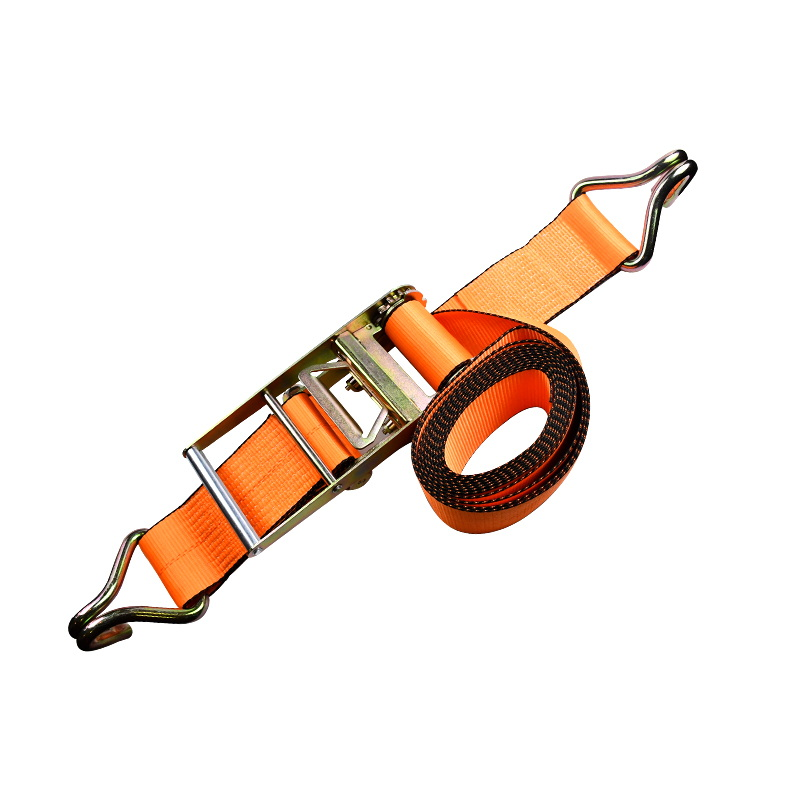
The strap that handles a pallet of consumer goods is not the one that should be on a piece of construction equipment. Here is a straightforward way to think about it:
Light commercial cargo up to 1,500 kg / 3,300 lbs
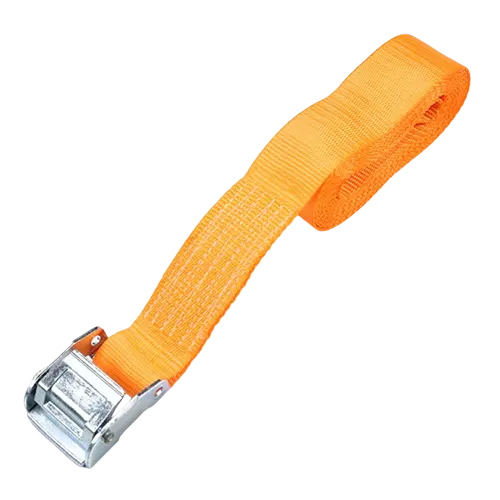
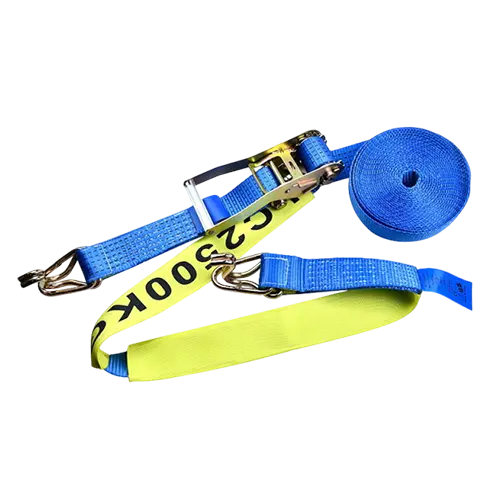
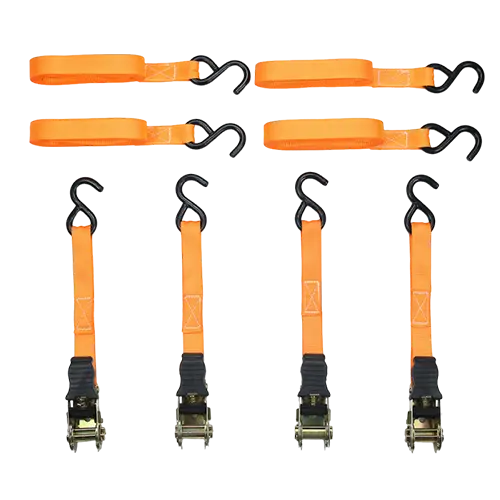
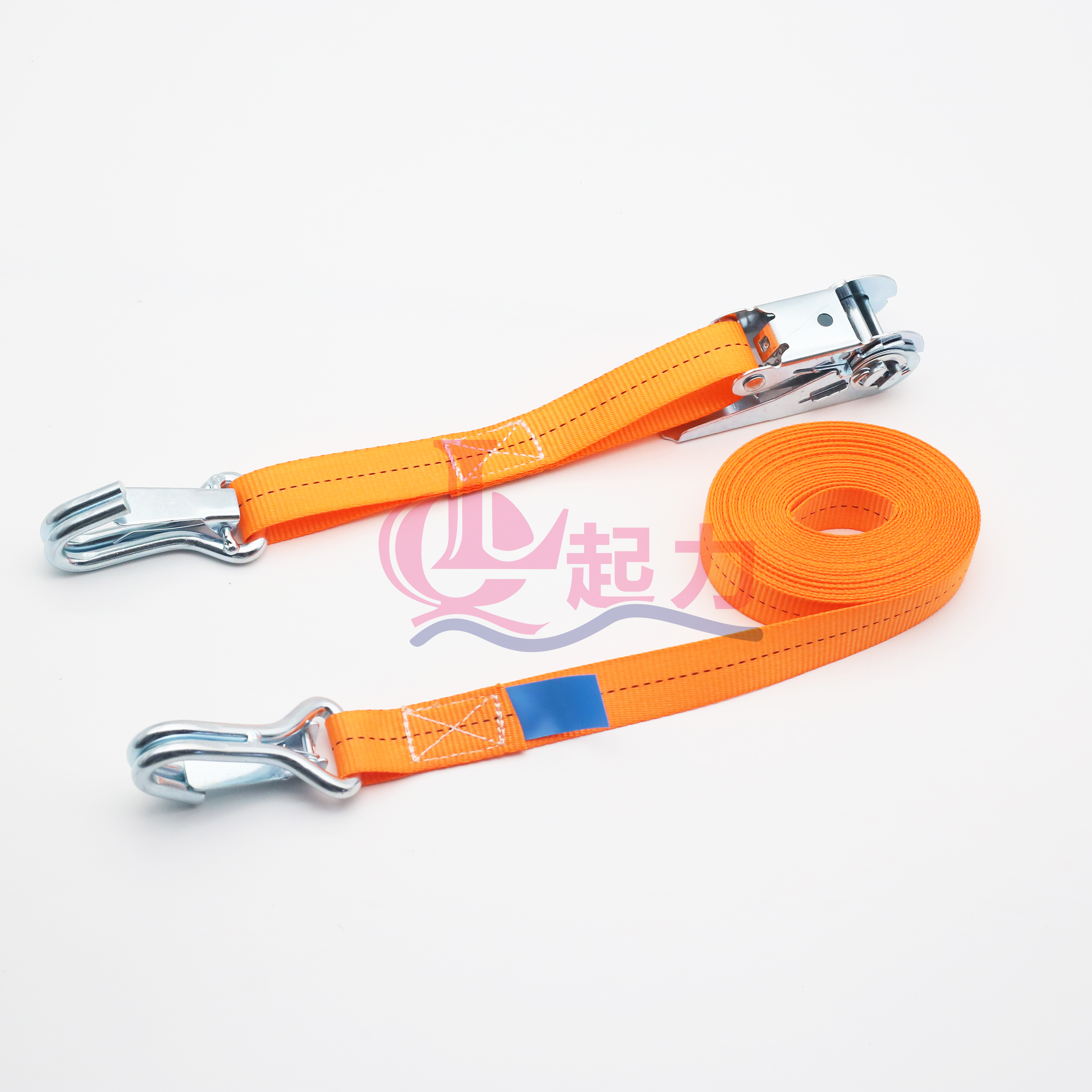
A 2-inch polyester ratchet strap at 1,500 kg WLL covers this range well. The Force 3000kg Blue Plastic Handle Ratchet Strap is built around exactly this profile — clean tensioning for trucks, trailers, and vans running standard commercial freight.
Heavy industrial and oversized loads
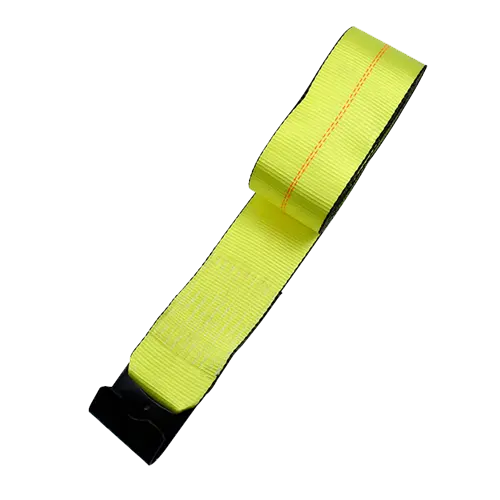
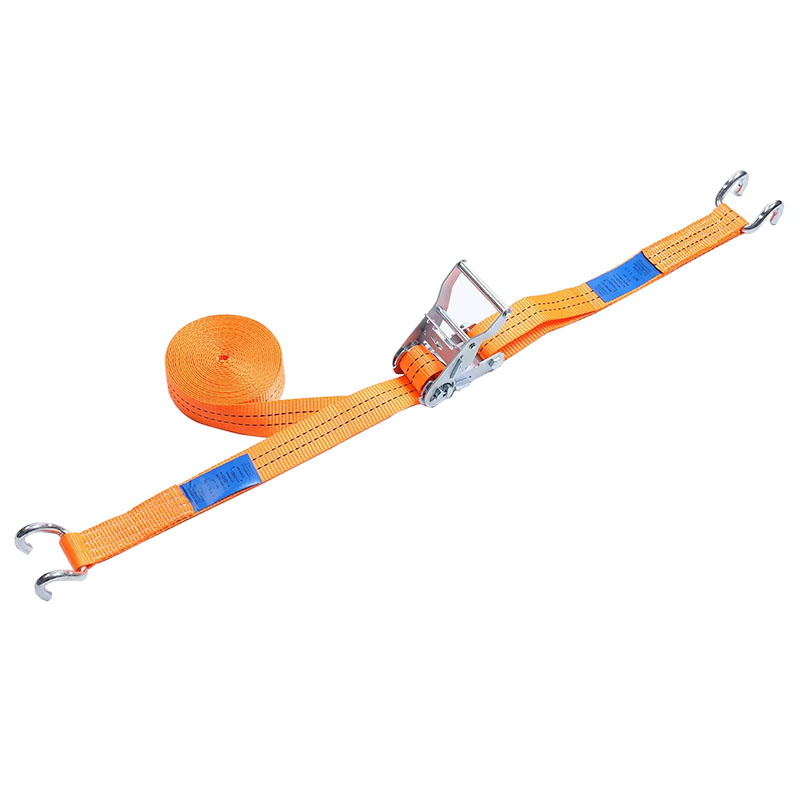
Move to a 4-inch strap with wire hooks and overlock stitching. The 4" x 30' Large-Tonnage Heavy Industry Ratchet Strap is designed for construction, mining, and heavy equipment transport — the kind of applications where a 2-inch strap simply does not have the load distribution geometry to work safely.
Enclosed trailers running E-track systems
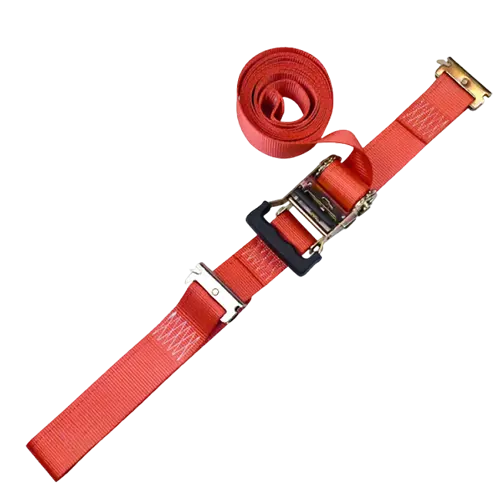
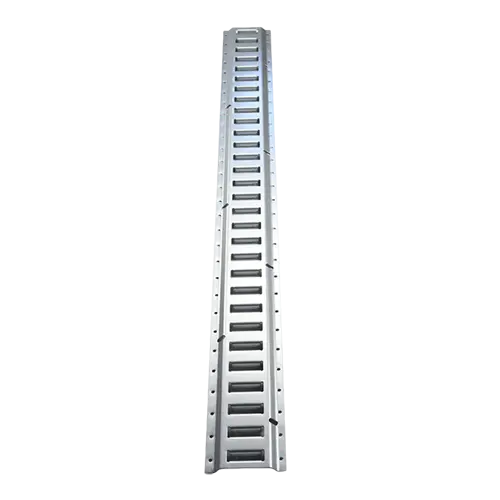
A dedicated E-track ratchet strap removes the need for fixed floor anchors entirely and lets you position tie-offs anywhere along the rail. For mixed freight operations, that flexibility compounds quickly.
The Honest Summary
Cargo securement enforcement is not softening in 2026. Federal rules are tightening, private freight networks are adding their own standards on top, and cross-border alignment will introduce another layer before the year is out. For procurement teams and fleet safety managers, this is not the environment to make tie-down hardware decisions on price alone.
Certified equipment, documented assembly ratings, and a supplier who can hand you third-party test data on request — these are no longer differentiators. They are the baseline for any operation that wants to stay on the road and out of inspection reports.
Force Rigging has supplied cargo control products to buyers across more than 30 countries for over 16 years. Everything we make carries CE and TUV GS certification. Our WSTDA membership keeps our specs current as North American standards evolve. If you want to talk through a specific application or match products to your freight profile, reach out directly — it is the kind of conversation our team has every day.

 Language